

Tungsten vs. Molybdenum: Differences and Applications
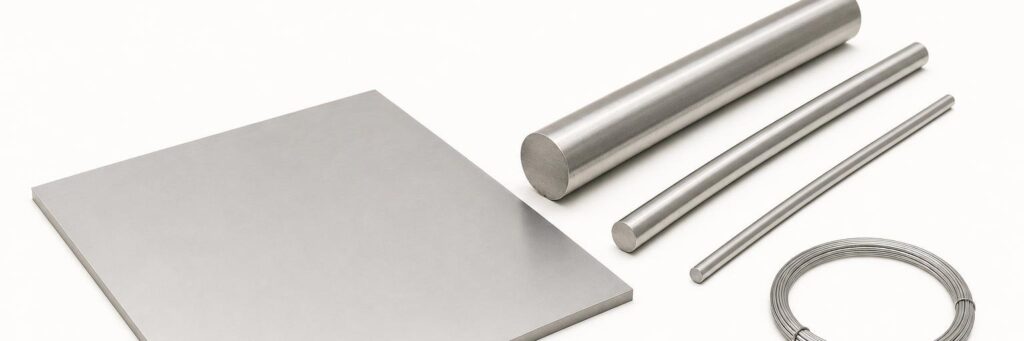
Tungsten and molybdenum are among the most widely used refractory metals in industry.
The direct answer: tungsten has the highest melting point of all metals at 3,420°C,
is nearly twice as dense as molybdenum, and remains mechanically stable at temperatures
above 1,800°C. Molybdenum melts at 2,620°C, is significantly easier to machine,
and is considerably less expensive – the more economical choice wherever tungsten’s
extreme properties are not required.
What properties distinguish tungsten from molybdenum?
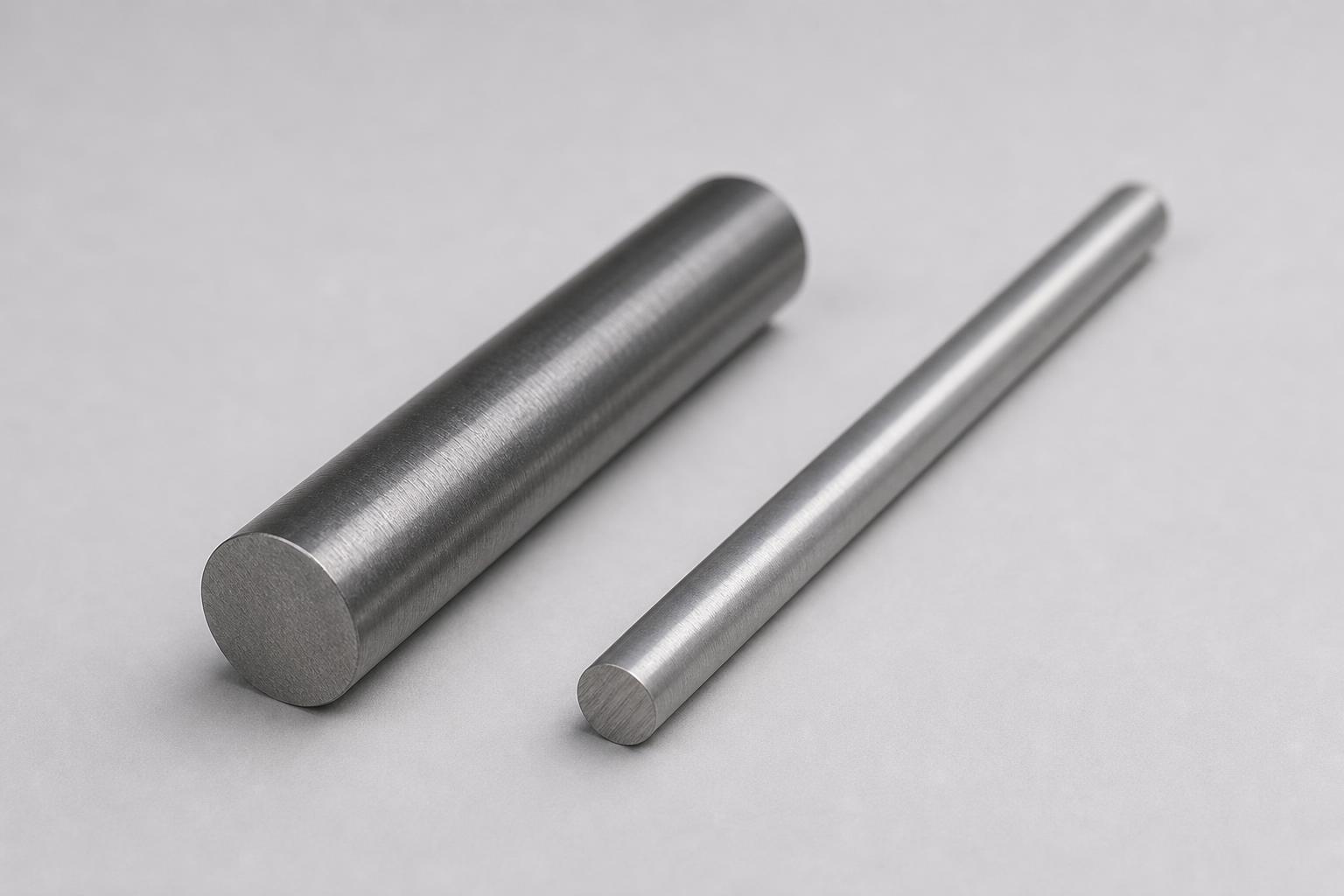
Both metals share fundamental strengths: exceptional high-temperature stability, low
vapour pressure, and good resistance to many chemical media. The key processing difference:
tungsten’s melting point rules out conventional casting – it is produced exclusively by
powder metallurgy and requires specialist downstream processing. Molybdenum, by contrast,
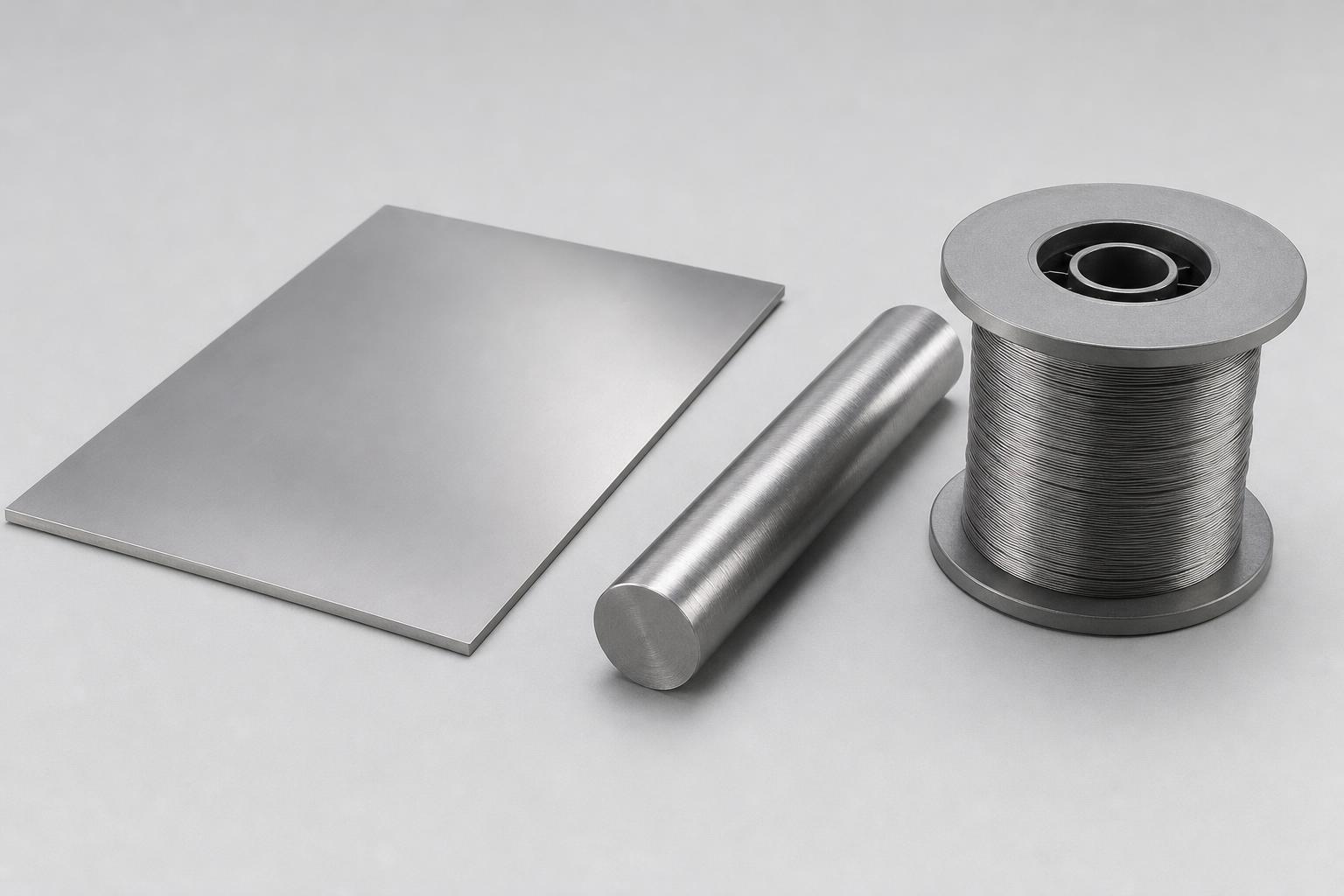
can be machined, rolled, and formed; semi-finished products such as sheet, rod, and wire
are available off-the-shelf across a wide dimensional range.
| Property | Tungsten (W) | Molybdenum (Mo) |
|---|---|---|
| Melting point | 3,420°C | 2,620°C |
| Density | 19.3 g/cm³ | 10.2 g/cm³ |
| Thermal conductivity | ca. 173 W/(m·K) | ca. 138 W/(m·K) |
| Manufacturing | powder metallurgy only | powder metallurgy, machinable, rollable |
| Oxidation resistance | very high (protective atmosphere required) | limited (above 500°C) |
| Relative price | high | significantly lower |
When is tungsten the right choice?
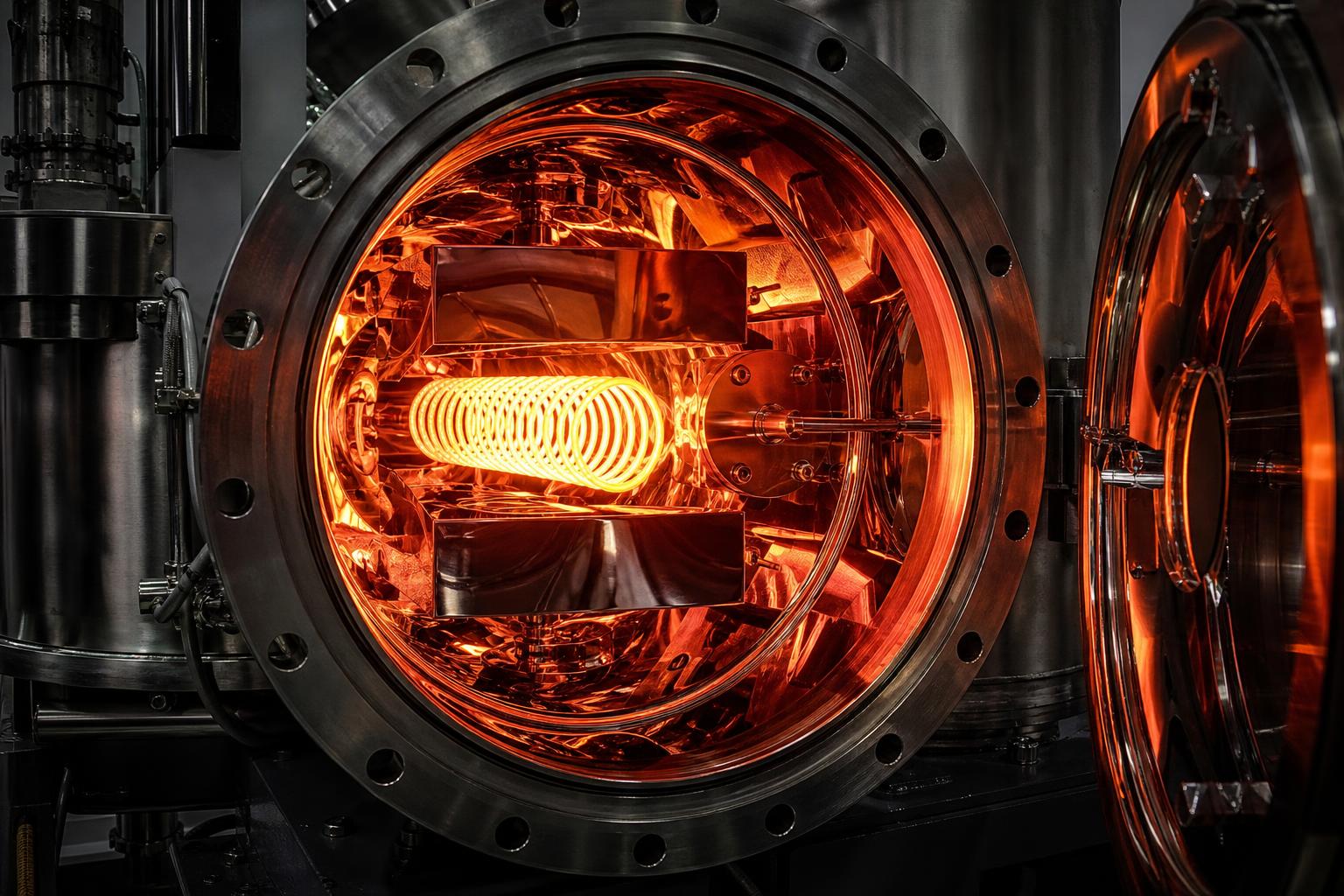
- Heating elements in high-temperature furnaces: Tungsten is the only metal
that remains mechanically stable above 1,650°C – the standard choice for high-vacuum furnaces
in the most demanding temperature class. - X-ray anodes: High density and high melting point make tungsten the standard
material for X-ray tubes in medical imaging and materials testing. - Radiation shielding: At 19.3 g/cm³, tungsten
is increasingly replacing lead – higher shielding performance at the same wall thickness,
without toxicity. - Welding electrodes (TIG/GTAW): Tungsten electrodes are standard in arc
welding due to their temperature resistance. - Aerospace and defence: Components in rocket propulsion systems and
high-temperature turbines where no other metal meets the requirements.
“Tungsten is the only metal that remains mechanically stable at temperatures
above 1,650°C – and therefore without alternative for the most extreme temperature
class.”
When is molybdenum the more economical alternative?
- Vacuum furnace engineering: Molybdenum heating elements, radiation shields
and support plates cover the service range up to approximately 1,600°C – at significantly lower
material costs than tungsten. More details:
Materials for vacuum technology. - Glass industry: Electrodes in glass melting tanks –
molybdenum has been the
established choice for decades due to its resistance to glass melts. - Chemical process industry: Plant components handling aggressive media,
hydrogen, and noble gas atmospheres benefit from molybdenum’s excellent chemical resistance. - Semiconductor manufacturing: As a sputtering target for thin-film deposition
– TFT displays, solar cells, integrated circuits. - Steel alloying: Around 80 % of global molybdenum production goes into steel manufacture (source: International Molybdenum Association, IMOA), improving high-temperature strength, toughness, and corrosion resistance.
Molybdenum’s economic advantage: equal high-temperature performance up to
1,600°C at a quarter to half the price of tungsten – with significantly simpler
machinability.
How does the cost of tungsten compare to molybdenum?
Molybdenum is significantly less expensive than tungsten. Depending on purity and
product form, tungsten typically costs two to four times as much as molybdenum. For
engineering designs where temperatures up to 1,600°C are sufficient, molybdenum is
therefore the more economical choice – without compromising on performance.
A further cost factor: tungsten’s exclusively powder-metallurgical production makes
downstream processing considerably more demanding than molybdenum, which can be machined
and formed conventionally.
In which industries are tungsten and molybdenum used?
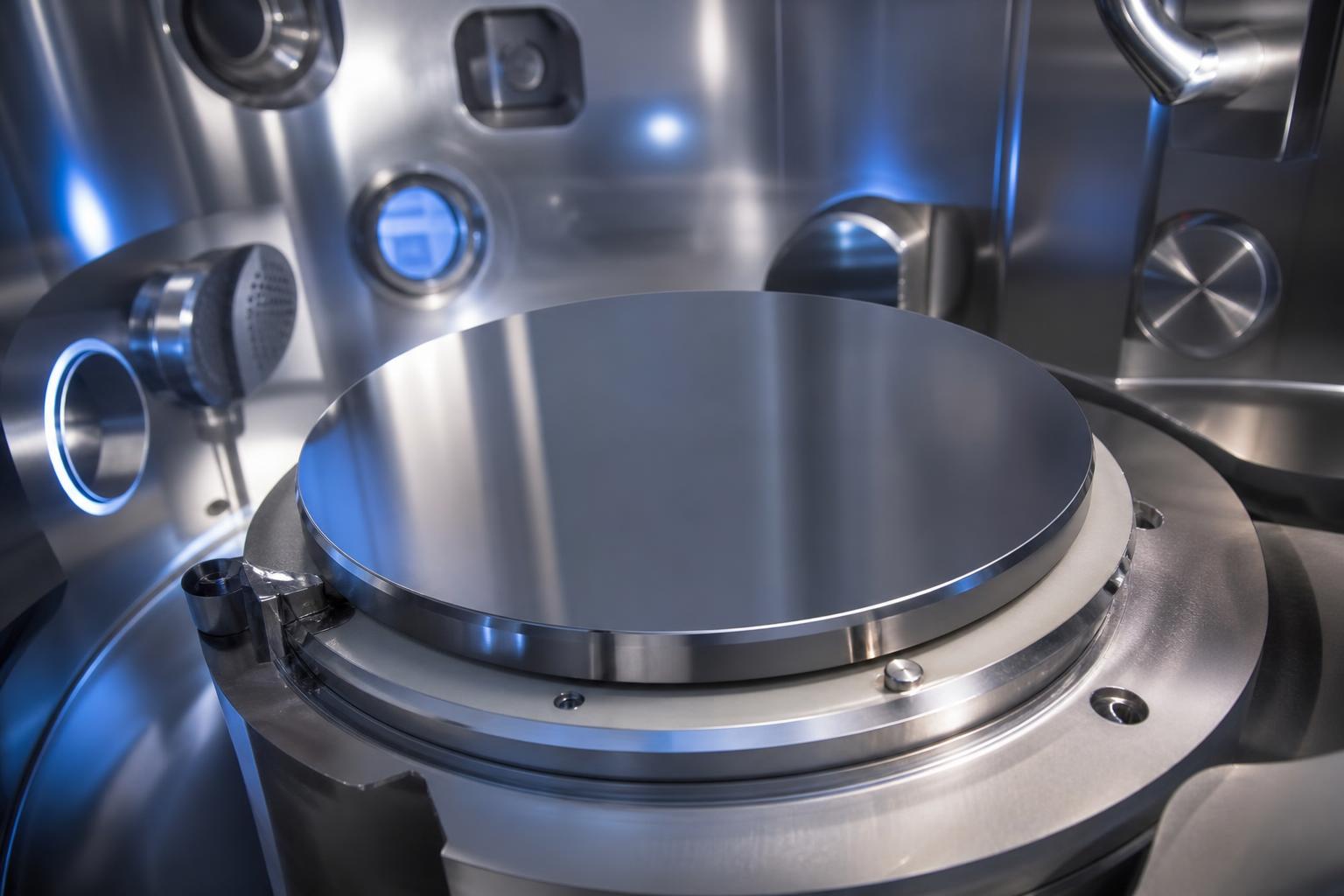
Both refractory metals appear in virtually every industrial sector with high thermal
or mechanical demands:
- Tungsten-dominant: Welding technology, X-ray technology, nuclear fusion,
radiation shielding, aerospace and defence - Molybdenum-dominant: Steel alloying (80 % of world production), glass
industry, vacuum furnace engineering, chemical processing - Both in parallel: Semiconductor manufacturing, composite materials for heat
sinks and electrical contacts, medical technology
For more on high-temperature applications:
Refractory
metals in high-temperature applications.
Tungsten or molybdenum: which material suits your application?
The material choice between tungsten and molybdenum depends on three factors: maximum operating temperature, mechanical requirements, and budget. As a rule of thumb: below approximately 1,800 °C (3,272°F) molybdenum delivers the same performance at lower cost; above that threshold, tungsten is irreplaceable.
Choose tungsten when:
- Continuous operation above 1,800°C
- Maximum density for radiation shielding required
- Extreme high-temperature strength demanded
- No machining required
Choose molybdenum when:
- Temperatures up to ca. 1,600–1,800°C are sufficient
- Easy machinability is important
- Cost optimisation is a priority
- Wide semi-finished product range required
Frequently asked questions about tungsten and molybdenum
What is the most important difference between tungsten and molybdenum?
Tungsten has the highest melting point of all metals at 3,420°C and is nearly
twice as dense as molybdenum at 19.3 g/cm³. Molybdenum is less expensive, more
machinable, and sufficient for most high-temperature applications up to approximately
1,800°C.
Which metal has the higher melting point – tungsten or molybdenum?
Tungsten melts at 3,420°C – the highest melting point of any known metal.
Molybdenum melts at 2,620°C – also extremely high, but around 800°C below tungsten.
Is molybdenum cheaper than tungsten?
Yes. Depending on purity and product form, molybdenum typically costs a quarter to
half the price of tungsten. For applications where tungsten’s extreme properties
are not required, molybdenum is the more economical choice.
Can molybdenum replace tungsten in practice?
For applications up to approximately 1,600–1,800°C, often yes. Tungsten becomes
irreplaceable when temperatures permanently exceed 1,800°C or when maximum density
– for example for radiation shielding – is critical.
What do tungsten and molybdenum have in common?
Both are refractory metals with extremely high melting points, low vapour pressure,
and good chemical resistance. Both are used as sputtering targets in thin-film deposition
and appear in composite materials with copper or silver for heat sinks and electrical
contacts.
Get in touch
Römerstraße 13
71296 Heimsheim, Germany