

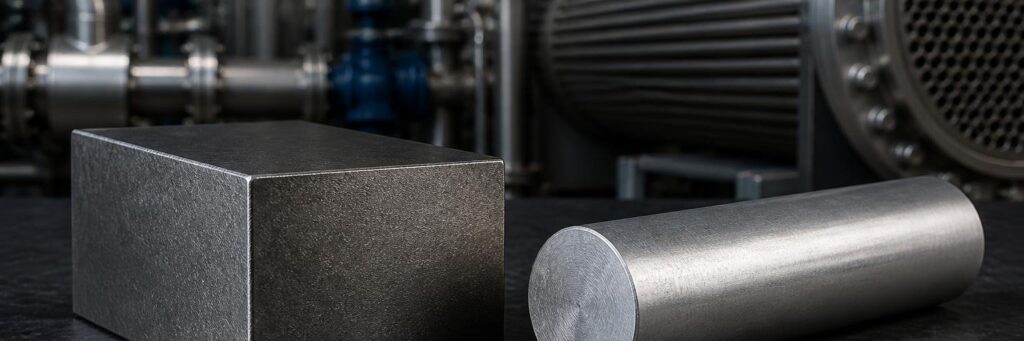
Tantalum and zirconium are the leading corrosion-resistant materials for the chemical process industry – but their strengths lie in different media. Tantalum offers near-universal resistance to strong mineral acids, including concentrated hydrochloric and nitric acid at high temperatures. Zirconium outperforms tantalum in dilute acids, alkalis and seawater – at a material cost roughly four to five times lower. The right choice depends on the corrosive medium, operating temperature and budget.
What properties distinguish tantalum and zirconium?
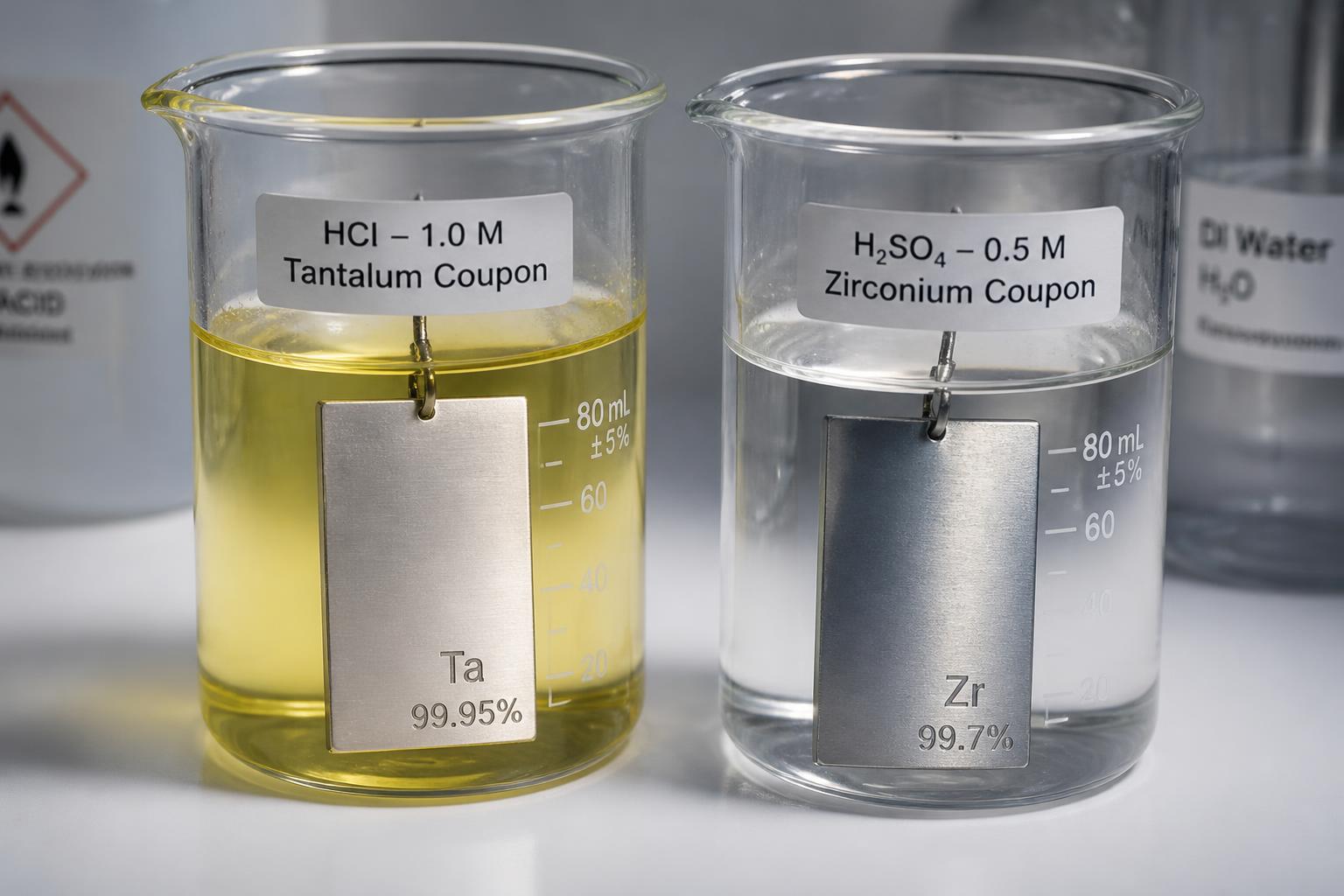
Both metals form a natural oxide layer that acts as a passivation barrier against corrosion. In tantalum, this layer is stable across virtually all mineral acids; in zirconium, it excels in dilute acids and alkaline solutions.
| Property | Tantalum (Ta) | Zirconium (Zr) |
|---|---|---|
| Melting point | 2,996 °C | 1,855 °C |
| Density | 16.6 g/cm³ | 6.52 g/cm³ |
| Tensile strength | ~270 MPa | ~380 MPa |
| Price (approx.) | €130–170/kg | €25–40/kg |
| HCl (all concentrations) | ✓ resistant | ◑ limited |
| H₂SO₄ (conc., hot) | ✗ not resistant | ◑ limited |
| Alkalis (NaOH) | ◑ limited | ✓ resistant |
| Seawater | ✓ resistant | ✓ excellent |
Source: ASM International Corrosion Data Survey; ✓ = resistant · ◑ = limited · ✗ = not resistant
When is tantalum the right choice?
Tantalum is the first choice when maximum corrosion resistance in strong mineral acids is required – particularly hydrochloric acid at all concentrations up to 175 °C, nitric acid and phosphoric acid. Typical applications include heat exchangers, reactor linings, distillation columns and valves in chemical process engineering.
Tantalum is also biocompatible and used in medical technology for implants and surgical instruments in contact with body fluids.
- Hydrochloric acid (all concentrations, up to 175 °C)
- Nitric and phosphoric acid at high temperatures
- Hydrobromic acid and organic acids
- Medical devices: implants, surgical instruments
- Electronics: capacitors, sputtering targets
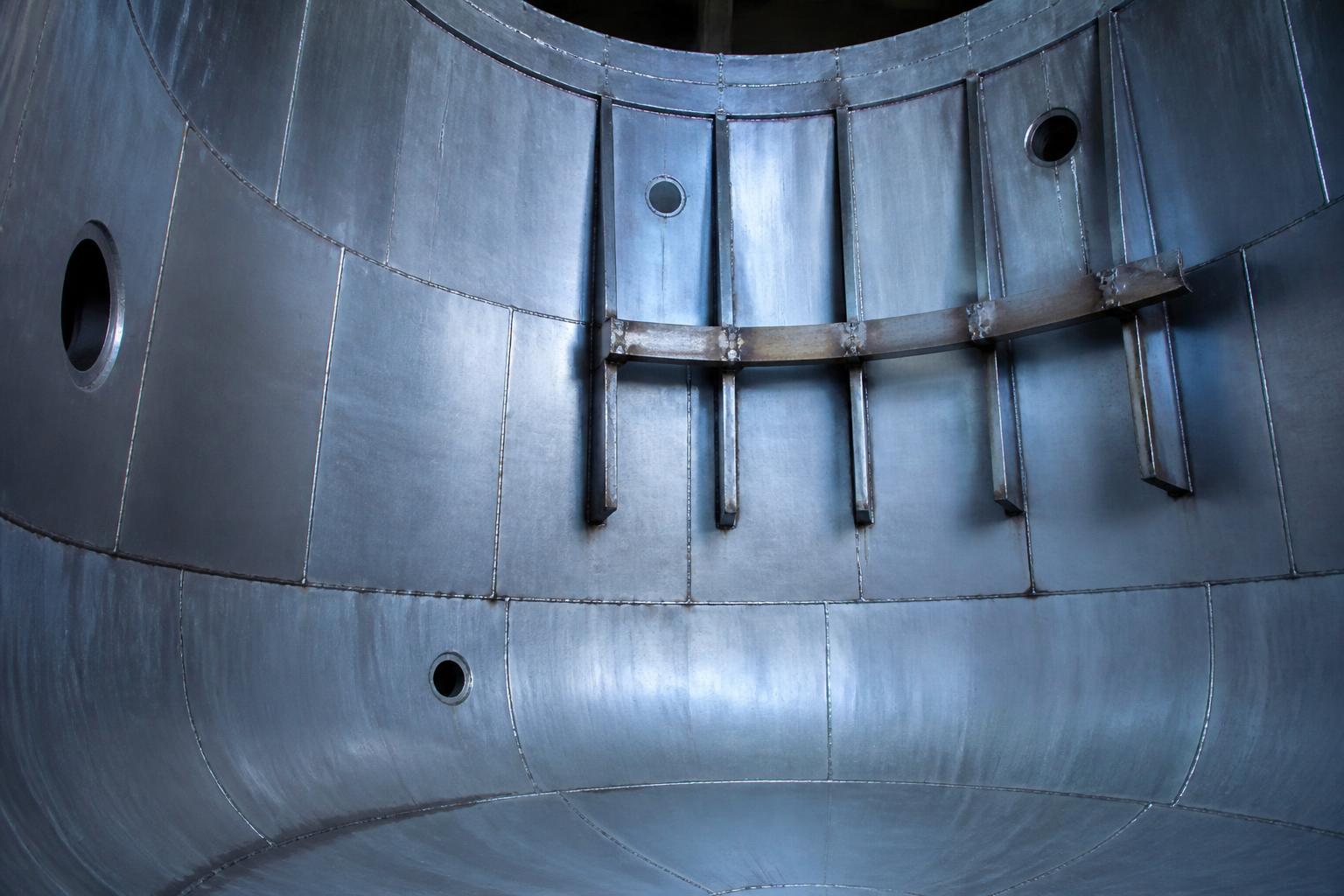
Tantalum’s limits are hydrofluoric acid (HF) and fuming sulphuric acid (oleum), which attack the passivation layer. For these media, zirconium or platinum-group metals are the alternatives.
When is zirconium the better alternative?
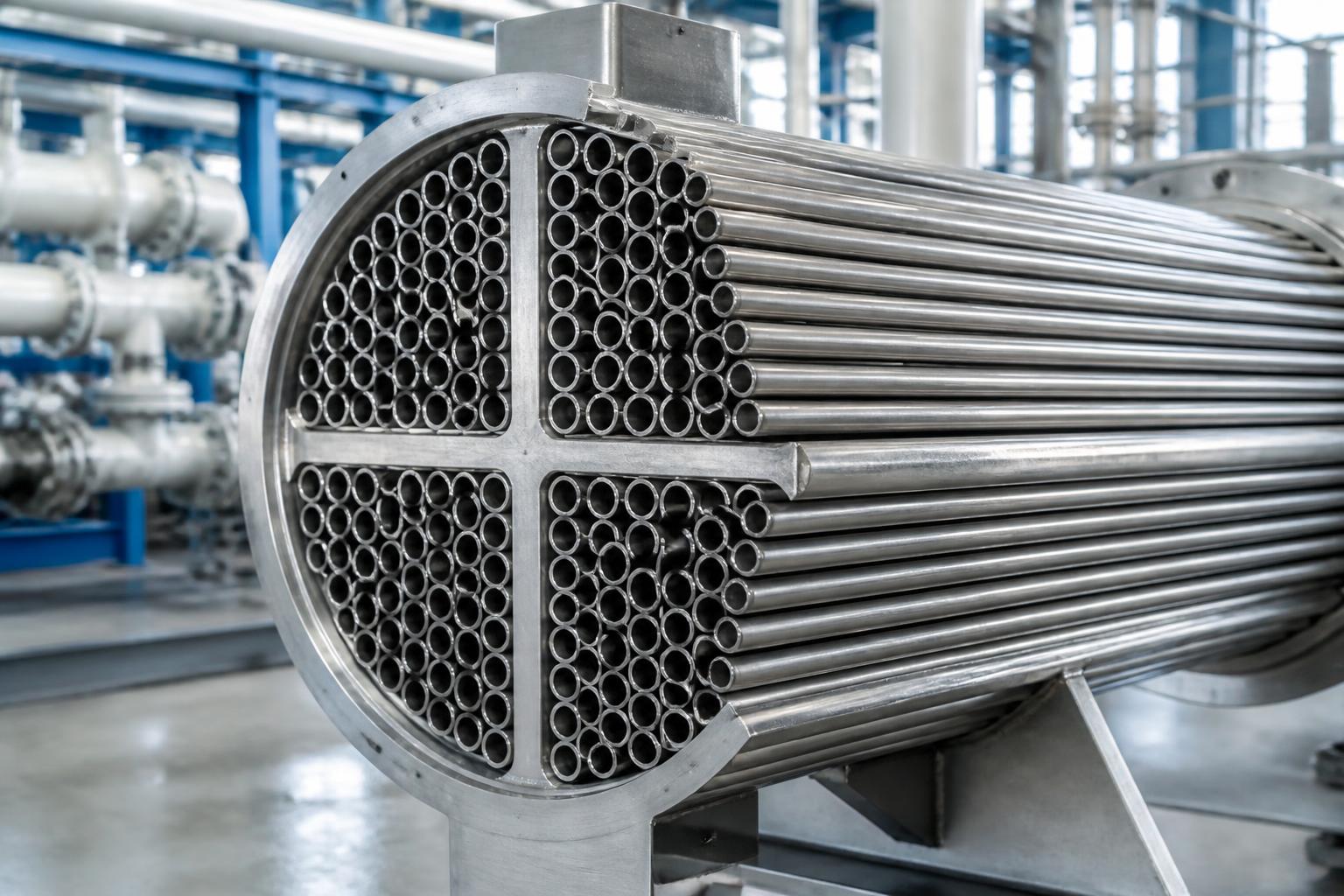
Zirconium outperforms tantalum in dilute acids below 50% concentration and in alkaline media where tantalum is susceptible to attack. It is the preferred material for seawater desalination, nuclear applications and the pulp and paper industry – at a price roughly four to five times lower than tantalum (source: ASM International).
- Dilute sulphuric and hydrochloric acid (< 50 %)
- Sodium hydroxide and other alkalis
- Seawater and saline solutions
- Nuclear power: fuel cladding tubes (Zircaloy alloys)
- Pulp and paper industry
Zirconium is not suitable for concentrated hydrochloric acid above 50 °C or concentrated sulphuric acid. In these cases, tantalum or tantalum-clad steel constructions are the correct choice.
Tantalum or zirconium: which material suits your application?
The decision depends on three factors: the corrosive medium, operating temperature and cost constraints. As a rule of thumb: zirconium is the economical choice for dilute acids and alkaline media up to around 100 °C; tantalum is indispensable for concentrated hydrochloric acid, hot acid mixtures and applications with tight corrosion tolerances.
| Criterion | Tantalum | Zirconium |
|---|---|---|
| Conc. HCl, all temperatures | ✓ first choice | ◑ limited |
| Dilute acids < 50 % | ✓ suitable | ✓ first choice |
| NaOH / alkalis | ◑ limited | ✓ first choice |
| Seawater | ✓ suitable | ✓ first choice |
| Cost | high | moderate |
| Biocompatibility | ✓ yes | ◑ limited |
For process plant design, a detailed corrosion test using the actual process medium is always recommended, as temperature, concentration and mixed media can significantly affect performance. E.WAGENER GmbH supports you with tantalum material selection and manufacture of components to drawing, as well as refractory metals for high-temperature applications.
Frequently Asked Questions – Tantalum vs. Zirconium
What is the main difference between tantalum and zirconium?
Tantalum is resistant to virtually all concentrated mineral acids, particularly hydrochloric acid, with a melting point of 2,996 °C. Zirconium outperforms tantalum in dilute acids, alkalis and seawater at roughly four to five times lower cost.
Which acids is tantalum best suited for?
Tantalum is especially resistant to hydrochloric acid at all concentrations up to 175 °C, nitric acid, phosphoric acid and most organic acids. It fails in hydrofluoric acid and fuming sulphuric acid (oleum).
Can zirconium replace tantalum in heat exchangers?
In many cases yes — when the medium is dilute acid, alkalis or seawater. For concentrated hydrochloric acid above 50 °C, tantalum cannot be replaced.
How large is the price difference between tantalum and zirconium?
Tantalum typically costs €130–170/kg in industrial procurement; zirconium €25–40/kg. The four-to-five-times price factor makes zirconium the more economical choice where corrosion resistance is equivalent.
Which material is used in nuclear power plants?
Zircaloy alloys (zirconium-based) are used for nuclear fuel cladding tubes because zirconium has an exceptionally low neutron absorption cross-section, minimising its impact on reactor neutron economy.
Get in touch
Römerstraße 13
71296 Heimsheim, Germany